| Date: | Thursday August 21, @06:46PM |
|---|---|
| Author: | ewing2001 |
| Topic: | News |
| from the BBC dept. | |
Intelligence also manipulated in England
UPDATE- Revealed: Blair role in naming Kelly (Guardian 08/24)
Controversial emails- Manipulation of Dossier (Guardian 08/23)
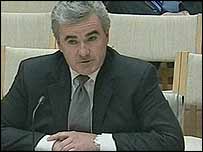
Photo: Ex-Intelligence Officer Andrew Wilkie
A former senior Australian intelligence analyst has accused Canberra of exaggerating the case for going to war in Iraq, on the first day of an official inquiry.
The Australian parliamentary inquiry is examining the intelligence used by Prime Minister John Howard to justify sending more than 2,000 Australian troops to Iraq.
As in Britain and the United States, there has been public concern in Australia over whether intelligence information, especially that relating to weapons of mass destruction (WMD), was manipulated.
Meanwhile also revealed at the England Inquiry: (Guardian, Friday August 22)
...Lord Hutton's inquiry was told that Dr Kelly:
More from the BBC article about Australia Inquiry
Andrew Wilkie, who resigned in March in protest at the war in Iraq, told the inquiry that the government had distorted intelligence information to suit its political purposes.
"The material was going straight from ONA (Office of National Assessments) to the prime minister's office and the exaggeration was occurring there, or the dishonesty was occurring somewhere in there," Mr Wilkie said.
"... Wilkie told the Senate inquiry Friday that key words from ONA reports which qualified the veracity of intelligence reports on Iraq's WMDs had been removed by the prime minister's office.
They had been replaced by more emotive language which supported the government's position on the threat of Iraq, he said.
"The material was going straight from ONA to the prime minister's office and the exaggeration was occurring in there, or the dishonesty was occurring somewhere in there," Wilkie told the inquiry, The Associated Press reports.
Asked if he was accusing Howard's office of "sexing up" intelligence, Wilkie replied, "Yes, it was sexed up."
Susan Watts (BBC) email to Dr Kelly 30/05/03
Her full transcript of tape recorded interview with Dr Kelly 30/05/03
Watts email to Dr Kelly 25/06/03
Copy bundle emails between Dr Kelly and Susan Watts – from Susan Watts’ “in box”. Various dates
Transcript Thursday, 21 August 2003, Afternoon
Washington Post -Saturday, August 23, 2003
...Gilligan's original report, on May 29, cited a confidential source in alleging that the government had "sexed up" the dossier by ordering intelligence officials to insert a claim that officials knew was probably wrong: namely, that Iraq could deploy chemical or biological weapons within 45 minutes. In his testimony, Gilligan acknowledged that he had misspoken in alleging that officials knew the claim was wrong.
Kelly's actual allegation was more subtle. He told another BBC reporter, Susan Watts, who tape-recorded the interview, that Blair's aides had seized upon the 45-minute claim to make the dossier more dramatic...
...In February Kelly told David Broucher, a British diplomat working on disarmament issues, that he was still in contact with senior Iraqi officials and was seeking to persuade them to cooperate with U.N. weapons inspectors. Kelly said he assured them they had nothing to fear.
But he told Broucher that he was worried an invasion would proceed anyway, and feared some of his contacts would be killed and that others would believe he had betrayed them.
"As Dr. Kelly was leaving, I said to him, 'What will happen if Iraq is invaded?' and his reply was, 'I will probably be found dead in the woods.' "
Broucher said he believed at the time it was a "throwaway line" that might have referred to being tracked down by Iraqi agents. "I now see that he may have been thinking on rather different lines."
The Observer -Sunday August 24, 2003
Tony Blair gave the go-ahead to the strategy that led to Dr David Kelly being named, believing it was 'inevitable' that the weapons expert would eventually be unmasked.
A confidential Cabinet Office note of a series of meetings held in Number 10 reveals that the Prime Minister supported 'making public that a source had come forward', but left the specifics of the two-stage 'naming strategy' to the Ministry of Defence.
Further evidence released last night also revealed that John Scarlett, chairman of the Joint Intelligence Committee, said that there was 'general agreement' within Number 10 that Kelly's name would be revealed.
'Agreement that the issue would inevitably become public,' he wrote in memo following a key meeting in Downing Street with the Prime Minister two days before Kelly was finally named.
'We are already open to criticism for not coming clean about the existence of a possible source.'
The disclosures, which come four days before the Prime Minister's appearance before the Hutton inquiry, is contained in a minute passed to the law lord's team last week and extended this weekend. They put Blair at the heart of the decision-making process that led to Kelly being subjected to a public grilling by the Foreign Affairs Select Committee.
The government scientist apparently committed suicide last month a week after he was named. Hutton has made clear that a key part of his inquiry into the circumstances of Kelly's death will focus on why there was so much pressure within the Government to reveal him.
Number 10 has constantly tried to distance itself from the decision to name Kelly, saying it was put in the hands of Geoff Hoon, the Secretary of State for Defence, and MoD officials. But far from leaving the issue to the MoD, a series of telephone calls between Hoon, Jonathan Powell, the Number 10 chief of staff, and Alastair Campbell, Blair's director of communications, over the weekend before Kelly was named, reveal Downing Street's intense interest in the issue.
Guardian -Saturday August 23, 2003
Two radically different versions of what happened inside Downing Street in September last year in the run-up to the war with Iraq emerged this week from Lord Hutton's inquiry.
The version that Downing Street presented to the public at the time was of a prime minister struggling to avoid war, intent on working within international law by going through the United Nations, and hinting that Britain was acting as a check on the wilder and more belligerent elements within Washington.
But the emails from various staff members at Downing Street produced in evidence to the Hutton inquiry this week suggest an alternative narrative. These emails, covering the period between September 5 and the publication on September 24 of the government's dossier on Iraq's weapons of mass destruction, are not full of concerns and proposals about how the dossier will impact on efforts to get the UN weapons inspectors back into Iraq and ensure that Saddam Hussein cooperated with them.
Instead, the thoughts expressed in the emails convey a frantic attempt to produce a dossier that will justify aggressive action against Saddam Hussein. Within the space of a fortnight and with almost no new evidence - other than the now infamous "45-minute warning" - Mr Blair's aides turned British policy towards Iraq upside down.
For more than 10 years, British policy was to contain Saddam by keeping him weak through sanctions, imposition of no-fly zones and diplomatic isolation. He was regarded as a potential threat but not a pressing one. He dealt with his own people brutally but, with regard to the threat posed to his neighbours and the west, he was in his box and, as long as the US and British planes remained in the region, he could be kept there.
By the time the dossier was published, Saddam had become someone that had to be dealt with as a matter of urgency, one intent on aggression towards his neighbours and the west. Downing Street had produced a new narrative.
In an email released this week Daniel Pruce, a Foreign Office diplomat seconded to the Downing Street press department, offers a glimpse into how No 10 worked to achieve this transformation. "Can we insert a few quotes from speeches he [Saddam] has made which, even if they are not specific, demonstrate that he is a bad man with a general hostility towards his neighbours and the west?" Mr Pruce wrote in the email on September 10 to another diplomat, Mark Matthews, who at the time was in the Foreign Office press department.
He set out a sneaky course of action for bringing public opinion round: "Much of the evidence we have is largely circumstantial so we need to convey to our readers that the cumulation of these facts demonstrates an intent on Saddam's part - the more they can be led to this conclusion themselves rather than have to accept judgments from us, the better."
In a separate email, Mr Pruce said: "Our aim should be to convey the impression that things have not been static in Iraq but that over the past decade he has been aggressively and relentlessly pursuing WMD while brutally repressing his own people."
He added that any reference to weapons should describe their destructive capacity, for example that UN weapons inspectors between 1991 and 1998 "found enough chemical warfare agent to kill x thousand people or contaminate an area the size of Wales."
Other Downing Street aides were also throwing in suggestions that would contribute towards an alarming picture of the Iraqi threat. Tom Kelly, a Downing Street press officer, in an email to Alastair Campbell, the director of communicationson September 11, wrote that there was a need to demonstrate that Saddam had not only the capability to mount an attack but the intent: "We know that [Saddam] is a bad man and has done bad things in the past. We know he is trying to get WMD - and this shows those attempts are intensifying. But can we show why we think he intends to use them aggressively, rather than in self-defence? We need that to counter the argument that Saddam is bad, but not mad."
Mr Kelly also wrote to another Downing Street press officer, Godric Smith, expressing regret that the dossier could not talk up the nuclear threat. The MI6 assessment was that while Saddam wanted a nuclear capability, he did not possess one and was unlikely to do so for years to come. Mr Kelly reluctantly acknowledged this:"The weakness, obviously, is our inability to say he could pull the nuclear trigger any time soon."
Mr Campbell, when asked at the inquiry on Tuesday about Mr Pruce's emails, played down his importance, saying that decisions about what should be in the dossier were taken by staff above his pay grade.
But such emails cannot be dismissed that easily. These emails were in response to a remit set out by someone senior at Downing Street.
WMD: Australia accused of hype (CNN, 08/22)
Other highlights and evidence from Hutton-Inquiry
Blair Aides Shaped Iraq Dossier
Revealed: Blair role in naming Kelly
Emails show how No 10 constructed case for war
All trademarks and copyrights on this page are owned by their respective companies.
printed from Iraq Inquiry Australia- Ex-Intelligence: Infos "manipulated" on 2004-05-30 23:45:56