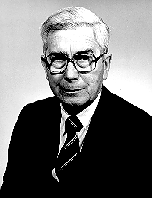
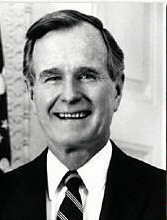
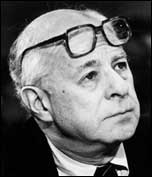
Photo: PNAC members Morton Abramowitz, Fred Ikle
With exceptions among some PNAC specialists, it is still pretty much unknown,
that many members of PNAC, the NeoCon Cabal around Douglas Feith, Paul Wolfowitz and
Richard Perle, had their own strong ties to Pakistan Secret Service I.S.I
(Inter-Services Intelligence), who founded the Taliban with help of the CIA.
Representative for this are PNAC-members Morton Abramowitz and Fred Ikle.
Abramowitz, former president of the Carnegie Endowment for International Peace and Former Ambassador to Turkey, was the leading advocate in the 80s, for supplying Stingers to afghan rebels like the Mujahedin.
Through Pakistan's Secret Service ISI, the CIA provided weapons, money and training.
Due to former CIA Official Ralph McGehee and The Nation (11/14/88 - 477,492,94-6),
it was former President George Bush, who met in 1984 with the leader of Pakistan's
Inter-Services Intelligence Directorate.
Abramowitz was Assistant Secretary of State for Intelligence from 1985 to 1989.
In September 1985, Morton Abramowitz, joined a delegation to Pakistan led by Assistant Secretary of Defense Richard Armitage.
As McGehee reported, Abramowitz said that time, "he already had a vague sense the war was not going well for the rebels and wanted to see for himself. The Mujahedin's specific need for enhanced air defense was driven home, he says, in meetings with Akhtar, assorted rebel leaders, and General Mirza Aslam Beg, a Pakistani army commander for the border region. "All professed to want the Stinger," recalls Abramowitz. Even the CIA's station chief told him he could not understand why agency headquarters opposed it."
Abramowitz reported back to former CIA Director Bill Casey.
Author Alan J. Kuperman ("The Stinger Missile and U.S. Intervention in Afghanistan) remembers Abramowitz 'words:
"Casey was lukewarm, almost disinterested, says Abramowitz. "He wasn�t for it, or strongly against it.".
Others at the agency, however, clearly were opposed to the Stinger. According to Selig Harrison, Deputy Director John McMahon strenuously pushed the alternative of the British Blowpipe on grounds it would maintain plausible deniability and be just as effective.
Photo: Casper Weinberger
In the fall of 1985, Fred Iklé made his second attempt to win Casper Weinberger�s support for the Stinger.
Weinberger was Secretary of Defense in the Reagan administration from 1981 to 1987.
Currently he is one of the Profiteers of the War in Iraq, while sitting together with George Shultz on the Board of Bechtel.
Ikle had a famous "tank meeting" in Fall 1985, and reported that a "vigorous quarrel" broke out in the meeting, but JCS opposition (Joint Chiefs of Staff) prevailed.
Author Kuperman explained, that the military�s objections to the Stinger proposal never before have been documented publicly.
However, a declassified 1986 Defense Investigative Service report summarizes an interview with General John Moellering (JCS), who attended the tank meeting as assistant to the chairman of the JCS.
The report reveals Moellering "was initially opposed to the possible release of the [Stinger] weapons to Third World countries for reasons of technology loss, accountability problems and depletion of a finite and small, strategic stockpile."
"The second JCS concern, the danger of depleting the strategic stockpile, arose despite the army possessing several thousand Stingers, on grounds that all of these missiles were needed for potential hostilities in Europe. The missile's manufacturer, General Dynamics, was reportedly unable to produce a new batch of first-generation Stingers for the rebels, because it was gearing up to produce a more advanced model known as Stinger-POST for the Pentagon."
Meanwhile, General Dynamics became one of the Big Players.
They are headquartered in Falls Church, Virginia, and employs approximately 57,000 people worldwide.
The Joint Chief's had also a third concern in 1985:
"Under the CIA's arrangement with ISI, after weapons arrived in Pakistan they effectively
left U.S. control."
Mort Abramowitz finally helped to undermine the concerns of the Pentagon.
In December 1985, former Secretary of State, George Schultz (now Bechtel and supporter of Arnold Schwarzenegger) finally endorsed the Stinger proposal, here explaining in his memoirs:
The Afghan people were war weary, and Soviet policy was "buying them off." The Soviets seemed to be winning.... There would be a narrow window in the next year or two in which pressure on the Soviets might be effective.... [T]he resistance did not have the weapons to deal with [Soviet helicopters] and the helicopters were wreaking havoc.... In the State Department some people worried that any American weapons system that could turn the tide would so antagonize the Soviets that it would sour our overall effort to improve relations. I strongly disagreed.
The Turning point came in January 1986, when Abramowitz escorted a delegation of Senators Hatch and Hecht, and Congressmen Michael DeWine (R-OH), Robert Lagomarsino (R-CA), and James Courter (R-NJ) to Pakistan.
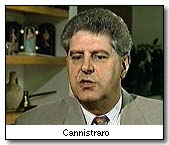
Also aboard were Vince Cannistraro, Charles Dunbar (the State Department's Coordinator for Afghan Affairs), and Norm Gardner (from the CIA�s operations directorate).
The delegation met with former Pakistani President Zia Ul-Haq.
"The Pakistani president made an unequivocal request that Stingers be supplied to the rebels."
"Zia also complained that he had been asking for the Stingers "since last year"
Again, back in Washington, the White House had yet another "dramatic" meeting In late January 86:
The meeting didn't reach any results and it was reportedly Abramowitz, who "reacted with outrage, and the meeting broke down without consensus".
It took some more months and new effort of Abramowitz and his supporters.
"Finally on 25 September 1986, Mujahedin fighters fired their first five Stinger missiles,
knocking three Soviet MI-24 Hind helicopters out of the sky on their first try."
The Pentagon's concerns however were right:
According to press reports, after 1986, "Stingers already have shot down aircraft twice in Bosnia and once in Tajikistan. In 1987, an Iranian boat fired a Stinger that reportedly hit a U.S. helicopter in the Persian Gulf but failed to explode.
Tunisian fundamentalists are reported to have used a Stinger in a failed 1991 assassination attempt.
Stingers also reportedly have been acquired by Kashmiri militants, Indian Sikhs, the Iranian drug mafia, Iraq, Qatar, Zambia (most likely from Angola), North Korea, Libya, and militant Palestinian groups.
In addition, authorities reportedly have broken up plots to acquire the missiles by the Irish Republican Army, the Medellin Cartel, Croatian rebels, Armenia, Azerbaijan, Chechen secessionists,and Cuban exiles."
In 1993, Under President George Bush, the CIA "requested $10 million to buy back Stingers, and when that proved inadequate, another $55 million in 1993.202 Former rebel leader and then-Afghan Prime Minister Gulbuddin Hekmatyar responded that he did "not intend to allow even a round of ammunition to be taken out of Afghanistan."
But this strategy didn't work out.
In January 1995, U.S. intelligence sources were quoted as believing that "over 370 Stingers are still in Afghanistan."
2 years later, the Project for the New American Century (PNAC), was founded.
Among its supporters were Dick Cheney, Paul Wolfowitz and Donald Rumsfeld, who recently hooked up with the Mujahedin-e-Khalq (MEK).
In open letters to Clinton and GOP congressional leaders the next year, the group called for "the removal of Saddam Hussein's regime from power".
They renewed their wish on September 20th, 2001, only a few days after the attack on America.
But due to former General Wesley Clark, their attempt happened already within hours on Sep11th:
In a June 15 edition of NBC's Meet the Press, he said:
"I got a call on 9/11. I was on CNN, and I got a call at my home saying, 'You got to say this is connected. This is state-sponsored terrorism. This has to be connected to Saddam Hussein.' I said, 'But--I'm willing to say it, but what's your evidence?' And I never got any evidence."
According to CBS, a Pentagon aide's notes from that day quote PNAC-member Rumsfeld asking for the "best info fast" to "judge whether good enough to hit SH at the same time, not only UBL." (The initials SH and UBL stand for Saddam Hussein and Osama bin Laden.)
While other PNAC-members Richard Perle or Paul Wolfowitz became recently silent, Morton Abramowitz is still a loud warhawk.
In a WP editorial from July 30, he argued, that "the American public has shown it can take casualties as long as it believes our effort makes sense. The American occupation may well turn out to have respectable results, although questions of political stability in Iraq will remain once the Americans depart.
But the idea that we would again take over another country essentially on our own seems politically out of the question for a long time to come."
His buddy Fred Ikle, currently also Distinguished Scholar at the CSIS and governor of the Smith Richardson Foundation, "responded" with some thoughts on North Korea in a San Francisco Chronicle article from August 3:
Ikle "believes North Korea should be warned that if it exports any nuclear materials or technologies "it will be finished" -- meaning subject to devastating military attack."
PNAC always thought in long time strategies, but they often changed their mind on their allies.
In March 2000, Ikle said about Pakistan:
"If possible, we should also give assurances to those threatened by the new proliferation to dissuade them from doing what Pakistan did in response to India's weapons tests. But whatever measures we take, we should not send gifts each time a regime violates nonproliferation agreements."
PNAC member Norman Podhoretz (father of NY POST Columnist John Podhoretz) had less scruples.
Already in 2002, he called on the United States to "launch World War IV".
Later, these words had been picked up by yet another PNAC-supporter, ex-CIA director R. James Woolsey (1993-1995).
In 1998, Pakistan successfully tested a nuclear device, heralded as the Islamic world's first atomic bomb. Two retired Pakistani nuclear scientists, Sultan Bashiruddin Mahmood and Chaudry Abdul Majid, were reported by authorities to have connections to the Taliban.
They had spent their careers at the Pakistan Atomic Energy Commission.
The Pakistan-India conflict was supported by the U.S.-British Alliance: BAe and the Carlyle Group.
On their board, Former Secretary of State James Baker, Ex-Secretary of Defense Frank Carlucci, Former President George H.W. Bush, and Former British Prime Minister John Major.
Bush agreed for 3.2 billion in new US aid over and above the 2 billion allocated to the Afghan
rebels.


All trademarks and copyrights on this page are owned by their respective companies.
printed from PNAC/StingerGate: 20 years ago on 2004-06-03 20:24:52