| Date: | Sunday November 23, @02:19AM |
|---|---|
| Author: | Mactyler |
| Topic: | News |
| from the www.stratfor.biz dept. | |
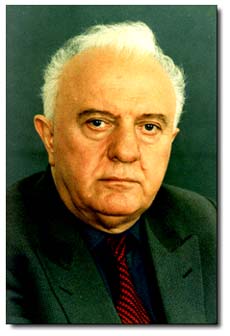
UPDATE: CNN Breaking: Georgian President Eduard Shevardnadze RESIGNS
Georgia: A Swan Song for the Gray Fox of the Caucasus?
Summary Georgia is locked in an internal conflict over election scandals that, given time, could escalate into civil war. Although Washington and Moscow have come down on opposite sides of the issue, they both might stand by the incumbent president to avoid chaos in Georgia.
Georgia: A Swan Song for the Gray Fox of the Caucasus? November 21, 2003 2337 GMT
Summary
Georgia is locked in an internal conflict over election scandals that, given time, could escalate into civil war. Although Washington and Moscow have come down on opposite sides of the issue, they both might stand by the incumbent president to avoid chaos in Georgia.
Analysis
In the shadow of the ongoing war in Iraq, an important geopolitical battle is enveloping Georgia. On the surface is an internal power struggle. Behind the scenes, however, is a tug-of-war between the United States and Russia for influence over Georgia.
Georgian President Eduard Shevardnadze on Nov. 20 declared victory in the Nov. 2 parliamentary elections amid massive protests and accusations that the polls were rigged. The radical opposition, led by pro-U.S. nationalists, is demanding Shevardnadze's resignation and organizing marches on Tbilisi, saying it will not stop until Shevardnadze is gone. The pro-Russian faction supports the president. The rival groups already have clashed violently -- par for the course in Georgia -- during massive rallies. If the crisis is not resolved quickly, Georgia will face civil war.
Controlling Georgia is important to Washington as a means of curbing Russian influence. Georgia is the only artery through which it can pump Caspian energy resources westward, bypassing Russia. By dominating Georgia, the United States could project its military forces deep into Russia and the Caspian basin and -- should it leave Iraq -- Turkey and Iran. It also would allow the superpower to influence the Russian-Chechen war and block al Qaeda from using Georgian territory.
Georgia also is important to Moscow since Russia cannot secure its southern borders unless it controls Georgia. Islamic militants long have used the porous borders to attack Russia from bases in Georgia. Moscow also would have a better chance at winning the Chechen war if the militants were deprived use of the neighboring country. Moscow needs to dominate Georgia to return Russia's former geopolitical influence in the Caucasus and Middle East.
Washington: Horse-Trading?
Shevardnadze -- a former Georgian KGB and Soviet Politburo leader -- has ruled since 1992 in a way reminiscent of Soviet totalitarianism and Asian despotism. Living standards have sunk deeply and corruption and organized crime have flourished. Still, he became a U.S. ally, letting in American Special Forces and lobbying for the Baku-Tbilisi-Ceyhan pipeline to pass through Georgia. There is a controversy over whether Shevardnadze received U.S. aid above the board or by less honest means: Some international and local media reported that much of the "aid" actually was stolen. Washington did back Shevardnadze, however, and encouraged him not to cooperate with Russia. The president consented -- except on the economy, where Russian gas and other products are vital for the country's survival.
Given Georgia's geopolitical importance, Washington and Moscow cannot overlook the current scandals and protests. This time, there was no place for Shevardnadze in either of their plans. While Moscow's lack of support for him was not a surprise, Shevardnadze doubtless was shocked to lose U.S. backing.
Washington changed its mind about Shevardnadze for two reasons. First, a new opposition force -- led by Mikhail Saakashvili, a 40-something politician -- has emerged and appears prepared to go out of its way to do Washington's bidding if it comes to power. Second, Shevardnadze is now so closely associated with corruption and other serious problems that a continued U.S. alliance with him might erode the U.S. position in the Caucasus.
Encouraged by U.S. support, the Saakashvili National Movement (SNM) has led several opposition groups trying to force the president to declare the movement's victory in the election -- government figures placed the SNM third -- and resign. Stratfor's sources within the opposition group say that high-ranking U.S. diplomats and State Department officials met with SNM leaders to encourage them to continue with the anti-Shevardnadze campaign. Some U.S. nongovernmental organizations (NGOs) also might have been involved in Georgia's internal conflict. In particular, Shevardnadze publicly accused the Soros Foundation of providing organizational and financial support to the opposition.
Moscow's Choice: Bad… Or Worse
In the November elections, Moscow supported Aslan Abashidze, leader of the Ajara region and descendant of the ancient rulers of Ajara. The government said that Abashidze's Revival Party placed second in the elections. He was forced to choose between supporting either the first- or third-place winner, because the SNM was dissatisfied with the results. With Washington's encouragement, it challenged the ruling party.
The SNM would have taken on Shevardnadze even if it had come in second. Abashidze had no interest in challenging the leader, however. While he is not a friend, he knows that the SNM is his true foe because of dramatic differences in their geopolitical agendas. He also nurtures the hope that the president one day might make him successor. He knows that if the SNM won, it would put him down. Abashidze threw his weight behind the incumbent. He did it at Moscow's urging after meeting with Russian Defense Minister Sergei Ivanov in Armenia and top Russian officials in Moscow.
Though there is no love lost between the Kremlin and Shevardnadze, Moscow understands that should Saakashvili come to power, Russia would lose its last footholds in the Caucasus. Stratfor's sources in the Russian Group of Forces in the TransCaucasus confirm that Russian troops in two bases in Georgia have been told not to intervene if Georgians begin shooting each other -- but the mere Russian military presence will serve as a deterrent for anti-Shevardnadze opposition. Russia does not want violence to break out, but President Vladimir Putin above all wants to avoid having the United States accuse him of interfering in Georgia's internal conflict, which it would frame as restoring "the wrong side" of the Soviet Empire.
We suspect that if Shevardnadze survives this scandal with Moscow's support intact, then Moscow's follow-on plan will be to replace him with Abashidze while Shevardnadze is still in power. Since Abashidze's Revival bloc came in second ahead of SNM, Moscow might then push the president to appoint Abashidze as Parliament chairman -- the de facto presidential replacement. Later, if the radical opposition continues and the protests turn violent, Moscow could pressure Shevardnadze to resign and call on Abashidze to lead Georgia.
We are not sure if Shevardnadze -- who hates Moscow -- will follow the plan. The president could use Abashidze and Moscow during the protests and then turn away from them when and if a resolution is crafted, like he did several years ago when the opposition in Tbilisi threatened a revolution: He approached Abashidze for support, received it, and then left Abashidze -- and by extension Moscow -- out in the cold with no compensation. In the end, Shevardnadze -- who has made many u-turns in his career -- might live up to his nickname, the "Gray Fox of Caucasus." This time, he might try to get pro-U.S. and pro-Russian opposition to clash and then cast himself as arbiter for peace.
Moscow's support of Shevardnadze and his intention to cling to power has made Washington correlate its position. While supporting Saakashvili, U.S. officials are telling Shevardnadze that Washington might still back him if he agrees to share power with the pro-U.S. opposition, for instance appointing Saakashvili, rather than Abashidze, as Parliament chairman, Stratfor's Georgian government sources say. They add that Washington at the same time has threatened to step up pressure on Shevardnadze. U.S. Assistant State Secretary Lynn Pasko implied this after visiting Shevardnadze and pro-U.S. opposition leaders, saying that the president should offer major concessions to the opposition.
If Shevardnadze does not resign in favor of Saakashvili soon, Washington's follow-on plan would be to instigate a gradual transition of power to the latter. Slowly bending under U.S. pressure but still maneuvering to survive, Shevardnadze is offering a compromise: He says he will convene the new Parliament and work until new elections are held in the near future. Of course, he plans to hold them no sooner than he thinks he can win.
Genie Out of the Bottle?
The outcome of the current confrontation, however, might be one neither Washington nor Moscow expects. If not resolved soon, the crisis will move Georgia toward civil war. Already there were clashes -- and the violence is likely to spiral. Encouraged by U.S. support, Saakashvili intends to push ahead no matter what. Pro-U.S. opposition sources told Stratfor that Saakashvili feels he has full American support since the Nov. 20 State Department's announcement of Washington's deep disappointment with Tbilisi for the fraudulent elections, accusing pro-Moscow Ajara of falsifying the results. Saakashvili's people took over one provincial district administration on Nov. 20, and major clashes between rival supporters could erupt any moment.
Georgia traditionally resolves political disputes with arms, and the country is bristling with weapons. Warlords affiliated with politicians lead dozens of armed groups -- paramilitary, separatist and criminal among others. They can be called upon easily to crush political opponents. Georgian media report that Shevardnadze moved loyal army units and Ajara special units to Tbilisi. Saakashvili says the Tbilisi police are siding with him, ready to turn arms against the government.
Modern Georgia seems not to have formed into a united geopolitical entity since gaining independence. Instead, it has been in constant wars and conflicts. Georgian guerrillas attack secessionist Abkhazia. South Ossetia is de facto independent. Abashidze rules Ajara with no interference from Tbilisi. Chechen militants and drug lords dominate the Pankisi region. Provinces populated by ethnic Georgians have none but the most infinitesimal ties to Tbilisi. Politicians use provincial clans to back their claims on power, often by force; armed supporters of former President Zviad Gamsakhurdia -- rumored to have been killed on Shevardnadze's order -- are still around.
In such a volatile region, a small firefight between security forces and the opposition could spark serious clashes that would pave the way to civil war.
However unpopular, Shevardnadze seems to be the only thing keeping Georgia together. Neither pro-U.S. Saakashvili nor pro-Russian Abashidze could do it. If Washington and Moscow realize this, they both will back Shevardnadze until the next elections in 2005. If not, the consequences likely will be dire. Civil war would destroy what little is left of Georgia and create excellent opportunities for international Islamic militants to cause havoc in southern Russia by sending fighters and arms from Georgia to Russia's Muslim-dominated republics of the North Caucasus. That would turn Chechen war into Caucasian war.
Civil war in Georgia would greatly endanger the construction of the BTC pipeline and Baku-Tbilisi-Erserum gas line. Sending U.S. troops to protect the projects would be difficult because the lines are built through Ajara and Javaketia, Russia-allied regions. Still, sinking Georgia in chaos threatens Moscow next door much more than Washington faraway. So Russia suspects that creating chaos in Georgia to infect Russia's multi-ethnic south could be Washington's plan. We are not sure the Russians are correct. But geopolitically, if the Bush administration wants to weaken other global players, there would be no better way to make Russia bleed than by helping inflame the Caucasus through linking the Chechen and Georgia wars. But U.S. ally, oil-rich Azerbaijan, would catch fire too in that scenario.
We believe that Washington and Moscow likely will do their homework and decide for the time being to stick by Shevardnadze, while each pressing him to make a succession choice in their favor. The genie might be already out of the bottle, however, and violence could easily tear fragile Georgia apart.
BBC -Tuesday, 17 September, 2002
After years of being considered a white elephant, a pipeline project, to carry Caspian oil to the world markets, is becoming a reality.
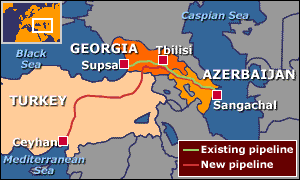
The Baku-Tbilisi-Ceyhan (BTC) pipeline will start a few kilometres south of Baku, the capital of Azerbaijan, and will run through the territory of neighbouring Georgia to the Turkish Mediterranean coast.
A special ceremony on Wednesday will be attended by the presidents of Azerbaijan, Georgia and Turkey.
The US has sent its energy secretary to join the celebrations.
Commercial doubts
Not so long ago, after offshore wells found insignificant amounts of oil, western companies were questioning the commercial viability of the BTC project.
The existing pipelines to the Georgian port of Supsa and Russian terminal in Novorossiysk, both on the Black Sea seemed to be enough.
Then, two years ago, the oil companies working in the region decided to commission new seismic and engineering investigations.
As a result, the known reserves of a major offshore oil field, Azeri-Chirag-Guneshli, operated by a British Petroleum (BP) led consortium were reassessed.
According to Tamam Bayatly, BP's Communications Manager in Baku, the reserves are now put at 5.4 bn barrels.
She says this is enough to make the pipeline commercially viable.
Strategic importance
This pipeline is of strategic importance not only to Azerbaijan, but to the other new independent states as well. This is a reliable way to the world markets."
Ilham Shaban, oil analyst
The 1,737 km-long pipeline will have the capacity of 1m barrels a day, and cost of transportation $3.2 per barrel.
BTC is said to be an effective alternative to Russia's pipeline network.
Ms Bayatly says the BTC is not going to compete with the Russian pipelines but rather enhance the existing network.
However, oil experts believe political considerations played a major role in the choice of the route.
American officials prefer a route that would weaken Russia's stranglehold on regional pipeline network and leave Iran on the sidelines. Local governments want less dependency on big regional powers, too.
"This pipeline is of strategic importance not only to Azerbaijan, but to the other new independent states as well", says Ilham Shaban, oil analyst in Baku. "This is a reliable way to the world markets."
Regional benefits
"Take Turkmenistan with its huge resources of natural gas and no access to the world markets," says Mr Shaban.
"As a result, The Turkmens have to sell their gas 2.5 times cheaper than the world price."
Turkmenistan could join a gas pipeline which is likely to be built alongside BTC to the Turkish town of Erzurum.
Kazakhstan is said to benefit from the BTC project as well.
Italian oil company ENI and French multinational TotalFinaElf which are taking part in the exploration project of Kazakhstan's Kashagan oil field, considered one of the biggest known in the world, have decided to join the BTC project, too.
According to BP's Tamam Bayatly, both companies have purchased 5% each.
Earlier this year, a group of international non-governmental organisations called on international financial institutions not to finance the BTC project.
They questioned environmental and social impact of the project on the region.
NGOs believe that the operator of the project, BP, has struck special contracts with the governments of three nations whose territory is used for the pipeline, giving it too much power.
Barry Holton, regional affairs director for the BTC company disagrees.
He says, "the agreements with the host countries assure that the project is carried to the highest standards. To suggest that they undermine or circumvent the national legislation is completely wrong. The agreements have been negotiated for quite a long time and ratified by national parliaments."
If everything goes according to plan, the BTC pipeline would become operational in 2005.
All trademarks and copyrights on this page are owned by their respective companies.
printed from Georgia: A Swan Song for the Gray Fox of the Caucasus? on 2004-06-03 13:23:54