| Date: | Sunday February 01, @08:56PM |
|---|---|
| Author: | admin |
| Topic: | AWOL |
| from the msnbc.msn.com dept. | |
UPDATE: ELDER STATESMEN OF THE REPUBLICAN PARTY CALL ON AMERICANS TO VOTE BUSH OUT OF OFFICE IN NOVEMBER
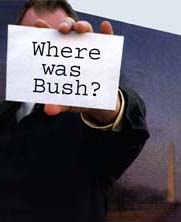
ELDER STATESMEN OF THE REPUBLICAN PARTY CALL ON AMERICANS TO VOTE BUSH OUT OF OFFICE IN NOVEMBER
WASHINGTON, Jan.30: Two elder statesmen of the Republican Party urged American voters to turn President George W. Bush out of office in November if he fails to reject the neoconservative policies of unilateral war and intervention in dealing with international terrorism.
Paul Findley (R-IL)
and Paul N. “Pete” McCloskey
(R-CA) appeared jointly at a public
hearing convened by the Council for the National Interest on Capitol
Hill on January 27 to examine the direction of US Middle East
policy. Also among the panelists were former Chief of Mission to
Iraq Edward Peck, African-American Civic Leader E. Faye Williams, and
Eugene Bird,
retired Foreign Service Officer and president of the Council for the
National Interest.
The hearing was the
first in a series that will examine the Middle East and Election
2004. The theme of
this hearing was “Voting to Reverse the Neocons.”
E. Faye Williams, who is also a CNI Foundation board member, spoke
on the need to speak the truth on the Middle East, where fundamental
issues are never addressed due to the manipulation of special
interest lobbies.
Eugene Bird, president of CNI, presented a positive program for peace in the Middle East as a whole, outlining a roadmap for regional peace. “We must understand that peace for Israel means peace with all Israel’s neighbors, not just the Palestinians,” he said.
Ambassador Peck also spoke to the fundamental lack of logic of the Bush Middle East policy – aiming to impose secular democracy on a region and culture that is profoundly religious. But the real trouble with a “war on terrorism,” he believed, was determining when it was over. He feared that the national emergency and our commitment to war would never end.
McCloskey pointed
to Bush’s support for the alliance between fundamentalist Christians
and Jews, who believe that Palestine should not exist, and warned
that it would have dire consequences for relations
with the Muslim
world, now numbering more than a billion men and women.
In carrying out his policies, “Bush isolates America from common undertakings with time-tested allies. He trivializes the United Nations and violates its charter... while at home, he stoops to bigoted measures based on race and national origin, tramples of civil liberties, and spreads anxiety, fear, and shame throughout the land.”
In Iraq, many mistrust the US because of its help to Saddam Hussein in the war against Iran and the Kurds; its refusal to assist the Shi’ites in southern Iraq during their uprising against Saddam in 1991; and the refusal of the US to distance itself from Israel’s anti-Arab colonialism.
“In an exquisite example of hypocrisy, with one hand the president tries to convince Iraqi Arabs that he offers them democracy and freedom while, with the other, he supports Israel’s denial of these very rights to Palestinian Arabs next door.”
As a Republican, Findley felt “no joy in making this case against the president. He may be sincere in his stewardship, but he is wrong – dead wrong – in the direction he is taking our country. I fear that he is manipulated by underlings who are primarily motivated by concerns for oil and Israel.”
He can “instantly
quiet guerrilla warfare in Iraq and anti-American protests
throughout the world” by
telling Sharon “all aid will be suspended
until Israel vacates the Arab territory Israeli forces seized in
June 1967.”
“By standing resolutely for justice for Palestinians, who are mostly Muslim, he would virtually end anti-American protests.”
But will Bush chart a constructive, peaceful new future for our nation?
If he acts, Findley concluded, “he will be a shoo-in for reelection. If he does not, I will join many Republicans in urging his defeat.”
However, he expressed his encouragement by the willingness of some American Jews to break ranks with the fundamentalists in Sharon’s camp. Recently the Central Conference of American Rabbis, made up of 1,800 reformed congregations, endorsed a resolution calling on a freeze of the settlements in the Occupied Territories and a retreat to the 1967 borders and a recognition of the Palestinian right to self-determination.
Read the complete text of Findley's speech
Read the complete text of McCloskey's speech
All trademarks and copyrights on this page are owned by their respective companies.
printed from Newsweek: Patriot Games (Bush was AWOL) on 2004-06-20 23:59:57