|
|
|
|
 Deception Dollars  t-shirts Sections
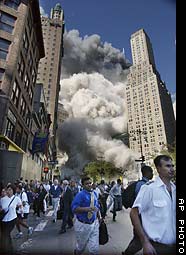
911 Main
- About - GFP HOF - My GFP - Older Stuff - Past Polls - Submit Story - Video - mp3 - SGTV SGTV/INN
Watch SGTV, our TV show, every Thursday on MNN webcast, 8 PM EST
INN is also our new breaking news partner. Their news shows incl. Interview Highlights with John Pilger, Joe Conason, Michael Meacher, Bev Harris, Cynthia McKinney, Sander Hicks and many others... 911 Encyclopedia
Ewing2001 Has compiled a comprehensive list of links an articles pertaining to 911. This is required reading for anyone interested in understanding that horrid day ESPECIALLY since the presstitutes refuse to their job.
Mike Malloy pulls no punches with the FLYING MONKEY RIGHT. If you want to hear a REAL liberal tell it like it is don't miss his show! Listen Daily 9pm to 12pm One Year Later
Tune in to get a liberal helping of the TRUTH. Peter Werbe stands up to the neo-cons and for liberal cause daily while keeping us all informed on the daily events that are shaping our world. Listen Daily 2pm till 5pm
Liberal Talk Radio In Florida! Spread the word. Tell your friends to listen in. Call the station every Saturday and give them your supportive comments (239-732-9369). Call The Guy James Show live on the air (239-530-1660). The Randi Rhodes Show
Books
All Books
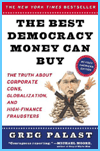
Greg Palast: Updated: with %40 more pages than the hard cover.
Alex Jones Video
Global Outlook
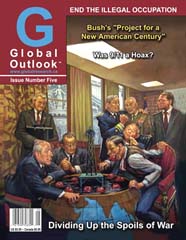
Michel Chossudovsky's Magazine on 911 and Post-911 Analysis Issue No.5-out now:Bush's "Project for a New American Century" Was 9/11 a Hoax? Diving up the Spoils of War Website Topics of the month: Was Kelly assassinated for "pulling the plug" The Forged Intelligence on Iraq Who's Who on the 9/11 "Independent" Commission Hot ranking thread: CIA closed friend with the finanzsystem of Al-Quida!
Counterpunch
|
What Happened to America? by Martin Schreaderposted by NYC on Friday April 25, @01:11PM

  from the Politics dept. 
Part Two of a Three Part Series A review of the rise of fascism to power in the United States By MARTIN SCHREADER Written: April 2-15, 2003 THE PERIOD OF the 1960s and 1970s saw great mass movements in the United States challenge almost every facet of the capitalist system’s order. The Civil Rights struggles in the early and middle years of the 1960s were the first indications that people were not willing to continue to accept the old order -- they were unwilling to continue living in the old way. One can certainly mark Martin Luther King's 1963 speech to the March on Washington, commonly known as the "I Have a Dream" speech, as an historical marker that points to the opening of this period. It was at approximately the same time that the movement against the war in Vietnam was beginning to develop on campuses across the country. Within five years, not only had these movements grown into massive political movements against the established order, they were joined by movements among communities historically oppressed under class society. The women's movement, for example, had actually started in the wake of the end of the Second World War, when many women who were being forced out of the industrial jobs they had held for the duration of the conflict fought back. This working women's movement continued through the 1960s, sparking the development of organizations and movements that, in the early 1970s, led to the formation of groups such as the Coalition of Labor Union Women. Similar class dynamics can also be seen in the early pre-movement for lesbians and gay men. Organizations such as the Mattachine Society and Daughters of Bilitis often were regarded as the "official" pre-movement, while working-class gays and lesbians were left to build their own groups (or, as happened sometime, work within the "official" organizations). These small formations exploded into the open after the Stonewall Rebellion in 1969, leading to the formation of groups like the Gay Liberation Front, Red Butterfly and the Lavender and Red Union -- all of which had a strong working-class element. The power of these movements was punctuated by a series of mass rebellions from Watts and Detroit to Newark, Boston and Oakland. These spontaneous rebellions represented, at the time, the sharpest expression of working-class outrage and anger at capitalism. They targeted the policies and tactics of the bodies that compose the core of the capitalist state -- the police, the "justice" system and the military. What events like Watts, Detroit and Newark showed was there was, at that time, a significant section of the working class that was unwilling to live under the old conditions. What it also taught was that, without a general political direction, such rebellions are more susceptible to implosion and control. Continued.
These events, taken in their totality, can be seen as reflecting not only "the gravest crisis of capitalist society," but also "the growth of the radicalization of the working class." In many respects, these movements also contained within them "the growth of sympathy toward the working class and a yearning for change on the part of the rural and urban petty bourgeoisie." Many of the early leaders of these "New Social Movements," as they were falsely called, hailed from all classes within capitalist society, but primarily from the petty bourgeoisie. The so-called "Black Bourgeoisie," or "talented tenth," was instrumental in the development of Civil Rights struggles, along with the "official leaderships" of the trade unions, student leaders, priests and other clergy, etc. The early women's and gay rights movements had strong working-class leaders, but, by the end of the 1960s, they either had been replaced by, or had begun to make space for, leaders from other classes. THE TRANSITION FROM the late 1960s to the early 1970s saw the development of a more coherent radicalization of the working class, as well as the destabilization of the American capitalist state. At the end of the 1960s, several movements within the working class in general, and organized labor in particular, sought to add a decidedly "proletarian" edge to the previously class-amorphous movements. The League of Revolutionary Black Workers (commonly known as "the League") was perhaps the best developed of these class-based formations. Growing out of the strong traditions of radical unionism that built the United Auto Workers and the CIO union federation in the 1930s, the League organized caucuses of Black workers that fought against both racism and capitalism. In Detroit, the center of the League, this also led to collaboration with forces around political organizations like the Black Panther Party, as well as joint work with some sectors of the so-called "New Left." In the early 1970s, working class militancy reached a critical point. Mass, militant struggles by industrial workers and government employees had put several sections of the ruling capitalist class on guard. The strike by postal workers across the U.S. is a good example of the militancy that gripped the country in the early 1970s. Then-president, Richard Nixon, was forced to order 30,000 troops to try and break that strike. In the same year as the postal strike, tens of thousands of autoworkers walked the picket line against General Motors -- then the single-largest employer in America. From all angles, the working class was on the march against capitalist exploitation. It is within and between these moments that we find "the extreme confusion of the big bourgeoisie" and "its cowardly and treacherous maneuvers aimed at avoiding the revolutionary climax." Elements of the "extreme confusion" are found in the two major police strikes of the early 1970s: New York, in 1971, and Baltimore, in 1974. The police, one of the "armed bodies of men" that make up the capitalist state, had resorted to measures commonly associated with the working class. Such a situation -- admittedly, though, not entirely unique in history -- certainly evoked a measure of "extreme confusion" among those forces within the capitalist class that saw the state as their exclusive property and the police as their most necessary defenders. However, the capitalists did not wait for this confusion to set in before exploring the kind of "cowardly and treacherous maneuvers" needed to stave off open workers' rebellion. Instead, they opted for a "carrot and stick" approach to social control. The "carrot" was a series of laws that sought to alleviate tensions in the oppressed communities -- Affirmative Action, Head Start, school lunches, etc. The capitalists' goal in instituting these programs was to try to remove some of the most basic demands for equality from the programs of the different movements of the working class. Affirmative Action and Equal Employment Opportunity, for example, sought to solve by capitalist means the gross social inequality between privileged whites and people of color, and between men and women, by creating special channels that, in theory, allowed for more access to existing institutions -- higher education, housing, jobs, etc. For the capitalists, instituting these programs was a calculated risk. On the one hand, the admittance of women and people of color into the leading circles of capitalist government, academia and culture presented an objective challenge. On the other hand, with the right "education," these capitalists thought, these newly trained government officials, professors and media consultants could find ways to shape society in a way that allows social discontent to be "released," like a steam valve, yet still contained. It is not that these programs, in and of themselves, are harmful. It is their administration by capitalism that has made them instruments of social control. The "stick" was a systematic program of disruption and violence against any organization within which could be found a current opposed to the existing capitalist system. (Mind you, this does not necessarily mean a current opposed to capitalism itself, merely a movement opposed to the form that it took in the U.S. at the time.) In many ways, the structures for this program had been in place since the McCarthyite period of the 1950s. Yet it was its incarnation in the 1960s that gave the program its universal and infamous name -- COINTELPRO. For those not familiar, COINTELPRO was the "Counter-Intelligence Program" run by the FBI, in conjunction with local and state police agencies. Its goal was to gather information on the various Civil Rights, antiwar, labor, democratic and radical movements in the U.S. and to find ways to disrupt their work. COINTELPRO agents spied on every organization considered "too left" in the U.S. Not even "respectable" liberals were spared from this campaign of maneuvers aimed at stifling opposition. Moreover, it is in this light that we can better understand the "dirty tricks" and "rat f*cking" carried out by agents of the Republican Party in the late 1960s and early 1970s, exposed in the wake of the Watergate scandal. If we wish to delve further into speculation and "conspiracy," we can also perhaps say that there is a real possibility that the assassinations of Malcolm X and Dr. Martin Luther King Jr. are in some way connected to this campaign of "cowardly and treacherous maneuvers." This was the "aggravation of the social crisis." BY THE END of 1976, the revolutionary wave that had swept across the country for the previous decade had ebbed dramatically. Many of the radicals who participated in or led the mass, grassroots struggles of the previous period, at one point or another, had retreated to the camp of the Democratic Party in the hope that candidates that are more "progressive" could be pushed to the fore. For their efforts, these "radicals" got Jimmy Carter. How did a mass movement for social, political and economic change end so anti-climactically? In the final analysis, this author can only conclude that we saw a complete failure of political leadership. Now, what does this mean? In short, the absence of a unified revolutionary, democratic and socialist movement, capable of winning the majority of exploited and oppressed people to the view of the need to take power into their own hands and build a new society, led to the beginnings of what only can be described as "the despair of the petty bourgeoisie, its yearning for change." The 1980s was characterized mostly by the rise of a new rightwing movement, both inside the halls of power and outside on the streets. The 1980 presidential election saw the victory of Ronald Reagan, a washed-up B-movie actor, anticommunist witchhunter and former governor of California. His rise to power was predicated on a manipulation of the fears and concerns of the so-called "middle class" -- primarily the new crop of petty-bourgeois professionals, the "yuppies" ("young urban professionals"), who emerged from the 1960s generation. Reagan's domestic policy centered on tapping into fears and frustration over social policies meant to alleviate the social tensions between communities from oppressed backgrounds and grossly exploited on one side, and the most privileged layers of the working class (the labor aristocracy) and "yuppies" on the other side. Playing on this fear -- this "collective neurosis of the petty bourgeoisie" and labor aristocracy (referred to collectively as the so-called "middle class") -- allowed for the creation of what can only be described as a social pressure-cooker. This societal cauldron yielded all sorts of political "jackalopes." The development of "Reagan Democrats" was perhaps the extreme expression of this trend. A "Reagan Democrat" was traditionally a "moderate Democrat" from the labor aristocracy or non-"yuppie" layers of the petty bourgeoisie (individual and family farmers, small shopkeepers, lower and middle managers, etc.) who would vote Democratic locally and/or statewide, but voted Republican for president. These elements provided a core that could be motivated into action by exacerbating concerns over "crime," anger over "welfare queens" or fears about "foreign competition." This social pressure-cooker also brought about the rise of new, extralegal organizations that were designed to attack the institutions and expressions of the social gains won in the period from the 1930s to the 1970s. This was the time when organizations like Operation Rescue and the Lambs of God began their campaign of clinic bombings and assassinations, when groups like Focus on the Family and the Family Research Council were campaigning against the democratic rights of women and the LGBT community, when organizations like the Council of Conservative Citizens and the National Association for the Advancement of White People were challenging the gains of the civil rights movement, when intellectual "think-tanks" like the American Enterprise Institute and the Heritage Foundation disputed the idea that the Enlightenment concepts of liberty and democracy were what motivated the First American Revolution, and when bodies like the Federalist Society and the Center for Individual Rights opened up an offensive on all these elements in the state and federal court systems. What tied all these diverse trends together was the rise of the Protestant "Christian Fundamentalist" movement, the most successful expression of which is the infamous Christian Coalition. The CC provided a unified and coherent political ideology, under the cover of "rediscovering the Word of God." However, the program advocated by the CC and its leaders, like Ralph Reed, was anything but "Christian." A casual review of the political aspects of the CC's program almost immediately reveals an agenda of subjugating and keeping atomized exploited and oppressed people, with obvious material salvation for their "middle-class" and bourgeois followers. In short, it was a fascist brown shirt with a minister's collar -- a form of clerical-fascism akin to Francisco Franco's Falangists of Spain, but not devoted to any one of the established religious sects. The Christian Coalition was able to tap into the "collective neurosis" that had arisen over the existing social antagonisms, and to elevate it into a "readiness to believe in miracles" ... and "violent measures," if necessary. For the "yuppie" elements of the petty bourgeoisie, there was another added dimension. Many of them had been close observers and/or participants in the struggles of the 1960s. They had witnessed the mass discontent and radicalism of that period, the near collapse of the old order, the failure to achieve revolutionary change, and the retreat back to the status quo. Many of those who had joined the various "New Left" and broader socialist movements of the 1960s believed that revolution was to come ... somehow. When it never materialized, their zeal turned into disillusion, demoralization and anger. They came to resent the working class, the exploited and oppressed. They felt betrayed, which fed into "the growth of hostility towards the proletariat," which had "deceived its expectations." End of Part Two of a Three Part Article by Martin Schreader. Part Three will be published soon.
< Thomas White resigns | MI5/CIA: Evidence on Iraq was fabricated > |
Global Free Press Login
Related Links
| ||||
|
||||||
|
[ home | contribute story | older articles | past polls | faq | authors | preferences ]
FAIR
USE NOTICE: This
site contains copyrighted material the use of which has not always been
specifically authorized by the copyright owner. We are making such material
available in our efforts to advance understanding of environmental, political,
human rights, economic, democracy, scientific, and social justice issues,
etc. We believe this constitutes a 'fair use' of any such copyrighted material
as provided for in section 107 of the US Copyright Law. In accordance with
Title 17 U.S.C. Section 107, the material on this site is distributed without
profit to those who have expressed a prior interest in receiving the included
information for research and educational purposes. For more information
go to: http://www.law.cornell.edu/uscode/17/107.shtml
If you wish to use copyrighted material from this site for purposes
of your own that go beyond 'fair use', you must obtain permission from the
copyright owner.
Powered by daVinci Interactive and Slashcode
 Add
GFP to your PALM via AvantGo
Add
GFP to your PALM via AvantGo
Add GFP HeadLines to your site XML
or RDF
Questions or Comments
Regarding This Site
webmaster@globalfreepress.com