Deception Dollars

t-shirts
Sections
Main
SGTV/INN
MUST SEE: 911 Documentry
Watch SGTV, our TV show, every Thursday on MNN webcast, 8 PM EST

Watch INN World Report, our new cooperation partner, every Friday (Repeats on Saturday + Sunday) on Free Speech TV, MNN and many other Public Access Channels, 6 PM EST.
INN is also our new breaking news partner. Their news shows incl. Interview Highlights with John Pilger, Joe Conason, Michael Meacher, Bev Harris, Cynthia McKinney, Sander Hicks and many others...
911 Encyclopedia
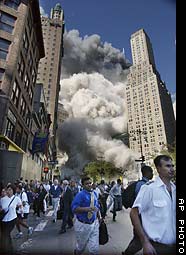
Ewing2001 Has compiled a comprehensive list of links an articles pertaining
to 911.
This is required reading for anyone interested in understanding that horrid
day ESPECIALLY since the presstitutes refuse to their job.
more...
Search

9/11 News and GFP-911 Archive

Mike Malloy
Mike Malloy pulls no punches with the FLYING MONKEY RIGHT. If you want to
hear a REAL liberal tell it like it is don't miss his show!
Listen Daily 9pm
to 12pm
One Year Later
Peter Werbe
Tune in to get a liberal helping of the TRUTH. Peter Werbe stands up to the
neo-cons and for liberal cause daily while keeping us all informed on the daily
events that are shaping our world.
Listen Daily 2pm till 5pm

Liberal Talk Radio In Florida!
Spread the word. Tell your friends to listen in. Call
the station every Saturday and give them your supportive
comments (239-732-9369). Call The Guy James Show live
on the air (239-530-1660).
The Randi Rhodes Show

more...
Internet Radio/Tv For Progressives
Books
Alex Jones Video
Global Outlook
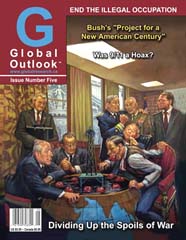
Michel Chossudovsky's Magazine on 911 and Post-911 Analysis
Issue No.5-out now:
Bush's "Project for a New American Century"
Was 9/11 a Hoax?
Diving up the Spoils of War
Website Topics of the month:
Was Kelly assassinated for "pulling the plug"
The Forged Intelligence on Iraq
Who's Who on the 9/11 "Independent" Commission
Hot ranking thread:
CIA closed friend with the finanzsystem of Al-Quida!
GLOBAL RESEARCH (CANADA) : FEATURE ARTICLES
25 November - 3 December 2003
Iraq: The Truth on the
Convoy which was attacked while driving through
Samara
The Rise of a New Dictatorship in Iraq , Firas Al-Atraqchi
The FTAA Protests: This is What Democracy Looks Like in Miami, Al Crespo
Enforcing Globalization: New World Order Weapons, John Valleau
Police State in America:
Bush’s Operation Clean Sweep: World War IV in
2004? John Stanton
Manipulating Pathologic Evidence: The David Kelly Story: Turning Murder
into Suicide, Rowena Thursby
The Legend of 9/11: Coincidence or Conspiracy: The Tale of The Millennial
Bomber, Chaim Kupferberg
Assassination of Reuters Cameraman, who had uncovered evidence of Mass US
Casualties in Iraq, Felicity Arbuthnot
Legal Scam in Denmark:
Danish government lawyers removed preconditions
for invasion of Iraq, Coilín Oscar ÓhAiseadha
Le Général Franks doute que la Constitution survive à une
attaque aux ADM
(armes de destruction massive) , John O. Edwards
Who’s Holding All the Cards?... The Bipartisan War Agenda, Michel
Chossudovsky & Ian Woods
Being "Against the War" is now a "Terrorist Act":
FBI
Targets Anti-War Activists
Counterpunch
|
(Open Headlines Popup Window)
posted by admin
on Wednesday December 03, @09:20AM


from the GFP dept.

Concerned American writes "Losing Battle for City's Heart
In central Iraqi town, anger at U.S.
By Mohamad Bazzi
MIDDLE EAST CORRESPONDENT
November 30, 2003
Samarra, Iraq - In a city seething with discontent, Adnan Maher held up a yellow plastic bag bulging with 6 pounds of rice, lentils, flour and sugar. "This is Mr. Bremer's Ramadan gift to the people of Samarra," he said, grinning.
Maher, chairman of the U.S.-backed city council here, distributed 3,000 such bags to Samarra's poor on Nov. 22. In each sack was a greeting from Paul Bremer, the top U.S. administrator in Iraq, marking the Muslim holy month of Ramadan.
As Maher's men loaded the food into pickup trucks and jeeps, Capt. David Johnson looked pleased. "We're trying to win the hearts and minds of Iraqis," said the civil affairs officer with the 4th Infantry Division. "We're doing it in small steps."
Less than half a mile away, at a soccer field riddled with American bullets, few Iraqi hearts were won. The athletic club's president, Jamal Jassem, said U.S. helicopters have fired on the field four times over the past month in their hunt for Iraqi insurgents. The stadium lights have all been blown out, and machine-gun fire punctured the water tanks and pipes.
Pointing to the bullet holes in the goalposts, Jassem asked, "Is this what the Americans mean by winning our hearts?"
This city offers a window into how the U.S.-led occupation is losing ground in Iraq. Unlike most Sunni Muslim cities in central and western Iraq, Samarra was a place that U.S. forces had a shot at winning over. The city of 200,000 was one of the few Sunni-dominated areas that suffered under Saddam Hussein's rule, mainly because Samarra and its leading tribes were regional rivals to Hussein's hometown, Tikrit.
But the Americans have been unable to capitalize on Samarra's hatred for Hussein and his ruling Baath Party. Since arriving in mid-April, U.S. forces have carried out dozens of nighttime raids, detained hundreds of people and imposed a nighttime curfew. They have also painted schools, put up blackboards, distributed food and repaired water stations in an effort to soothe the anger in this city 60 miles north of Baghdad.
"The Americans made serious mistakes from the very beginning," said Shaker Mohammed, the city's U.S.-appointed mayor and a former Iraqi army general. "When U.S. soldiers search houses at night, they tie up the men and they frighten the women and children. This breeds resentment."
Akram Shouk is just the kind of person that the Americans could have won over in Samarra. One of his older brothers was executed by Hussein's regime in the early 1990s. Two of his other siblings were imprisoned for six years for working against the Baath Party, and Shouk lost his grocery store under the regime's policy of collective punishment.
"I hated Saddam because of all the pain he caused my family," said Shouk, 43, who now tries to earn a living as a laborer. "I was very happy when the Americans got rid of him. I thought they would help us improve our lives."
But Shouk turned against the U.S. occupation after troops raided his home one night last month. As he tells it, about 20 soldiers surrounded his house, broke down the metal door, took him and his two teenage sons outside, put sacks on their heads and tied their arms with plastic handcuffs. The soldiers then spent two hours searching the three-room house for weapons and pro-insurgent material.
"They broke some of my dishes, damaged my furniture and they dragged mud all over my floor," said Shouk's wife, Nabiha, pointing to a broken wooden dresser.
Shouk thinks the Americans were tipped off by a neighbor who holds a grudge against him. "They didn't find anything, so they just left," he said. "They terrorized us and they didn't even apologize."
Samarra is part of the so-called Sunni Triangle, a region stretching west and north of Baghdad that formed the foundation of support for Hussein. U.S. forces have faced the stiffest resistance in these areas.
Two weeks ago, U.S. fighter jets and artillery pounded empty farmhouses at the city's outskirts - places that military officials said had provided shelter to insurgents. The bombing was part of an offensive in central Iraq that began Nov. 2 after guerrillas shot down a U.S. Chinook helicopter near the western city of Fallujah, killing 16 soldiers.
"We are sending a message. We are showing that we are here," said Maj. Gordon Tate, a spokesman for the 4th Infantry Division, which is based in Tikrit.
As much as the people of Samarra hated Hussein, they are now livid at the Americans.
"No matter how much food they hand out or how many schools they say they're going to build, we're never going to accept the Americans here," said Ali Abdullah, 31, a guard at the soccer field that was attacked by U.S. helicopters. "They are occupiers and we will drive them out."
Even Maher, a tribal leader who was appointed by the Americans to head the newly formed city council in April, speaks of the potential for widespread resistance.
"As politicians, we want to have a dialogue with the Americans," said Maher, 61, a former Iraqi air force general who was imprisoned by the Baathist regime for six years. "We want to resist their occupation politically, but if we find that road is closed, then we will have to resist them another way."
The U.S. Army withdrew most of its troops from Samarra on Nov. 15 and moved them to a garrison about six miles outside the city. The redeployment is part of a wider effort by U.S. commanders to turn over security inside cities and towns to Iraqis. But in Samarra, guerrillas attacked one of the U.S. bases just hours after it was handed over to Iraqi forces.
Maher is worried that the ill-equipped Iraqi police and civil defense corps will not be able to handle security inside the city on their own. The police are still short of weapons, patrol cars and radios. And they're anxious about being targets of suicide attacks like those on police stations in other parts of Iraq.
"Some people do want the Americans to stay here, and are willing to work with them," said Mohammed, the mayor. "But they can't say that publicly because they're afraid of retribution."
History weighs heavily on Samarra, and most conversations with residents frequently drift into how, in the ninth century, the city became capital of the Abbasid dynasty that ruled the Muslim empire. The Abbasid seat of power remained in Samarra for 50 years before it was moved back to Baghdad.
More than 1,100 years later, that history became a threat to Hussein. The dictator hailed from a village near Tikrit - a small city about 30 miles north of Samarra - best known as the birthplace of the Muslim warrior Salahuddin. Because Hussein tried to portray his right to rule as a revival of Salahuddin's legacy, he had to sideline Samarra.
As soon as he became president in 1979, Hussein moved the capital of Salahuddin province from Samarra to Tikrit. He relocated the university, government offices and the regional Baath Party headquarters. Hussein also executed dozens of Baath activists in Samarra and marginalized army officers from the city.
"Saddam hated this city because he was from a small village that felt inferior and poor in comparison to Samarra," Mohammed said. "He prevented the government from spending any money to improve the agriculture or infrastructure here."
For centuries, the people of Samarra have eked out a modest living by growing date palms, citrus groves, olives and lentils. Under Hussein's rule, farmers suffered because government grants went to Tikrit.
Hussein also imposed restrictions on Samarra's other main source of income, religious tourism. Even though it is a predominately Sunni city, Samarra is home to a major Shia Muslim shrine: the gold-domed Imam Al-Hadi Mosque. Hussein's regime considered the Shia religious pilgrims a potential danger, and his security services built elaborate networks of spies to monitor the visitors.
In December 1994, there was a final rupture between Hussein and Samarra, when Wafiq al-Samarrai, the head of Iraqi military intelligence at the time, defected to the West. Hussein launched another purge of the Baath Party in Samarra and removed many military officers who came from the city.
With this history of neglect and constant purges, the Baath Party lost its roots in Samarra. The city began to draw Islamist groups that flourished even under Hussein's rule. Today, these puritanical Sunni movements are encouraging the local resistance.
Their message can be found in a row of cramped shops hawking religious tapes and CDs in the city's center. Mahmoud Hassan does a brisk business selling recordings of militant Sunni preachers, including Sheik Ahmed Koubaisi, a cleric exiled by Hussein and banned by U.S. officials from returning to Iraq.
Hassan also sells CDs about Osama bin Laden, the Sept. 11, 2001, attacks and Chechen guerrilla commander Khattab, a Saudi-born militant killed last year.
"All the mosques here talk about fighting the Americans," said Hassan, 28. "No one in Samarra has anything good to say about the Americans, unless he's a collaborator."
"
< Dean: "Bush knew" (9/11)
| Declassified Transcripts: Kissinger okayed 70s Argentina War >
|
Global Free Press Login
Related Links
|

 Add
GFP to your PALM via AvantGo
Add
GFP to your PALM via AvantGo